Sharing, supervision and cohorts
Three different things share the word sharing here, and they expose different amounts. Worth separating before you invite anybody.
7 min read · article 8 of 10
Four roles
Access to a shared document or work item resolves to exactly one of four roles. These are enforced wherever the resource is touched, not just in the interface that shows them.
| Role | Read | Comment | Edit | Invite others |
|---|---|---|---|---|
| Owner | yes | yes | yes | yes |
| Co-writer | yes | yes | yes | no |
| Reviewer | yes | yes | no | no |
| Viewer | yes | no | no | no |
Reviewer is the usual role for a supervisor: they can comment without being able to rewrite.
Document, or work item
Sharing one document is the narrowest option. The other person gets that document at the role you chose, and nothing else. Right for a colleague co-writing one paper.
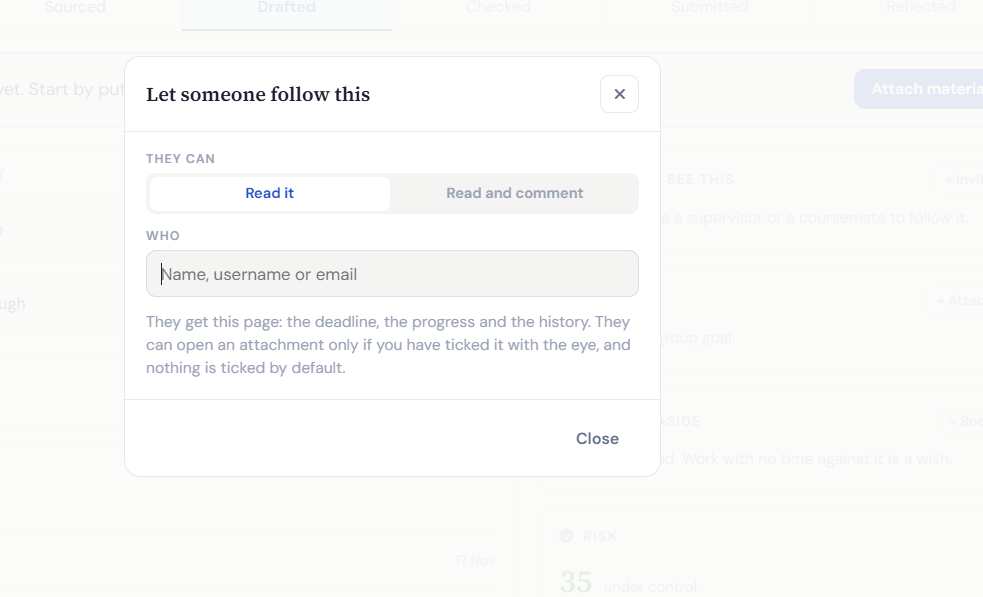
Sharing a work item is wider, and usually what a supervisor should get: the readings, the breakdowns, the critiques, the draft, the schedule, and the history of what was added when. It answers "where is this up to" without anybody writing a summary.
Cohorts
A cohort is a persistent group: a lab, a reading group, a seminar, a project team. It carries more than a chat thread.
- Members and admins. Admins manage membership and settings; the join policy decides whether people can join directly or must request.
- Channels with threaded discussion, mentions, and a per-cohort notification preference.
- Goals with assigned parts. A goal splits into parts and each part is given to a named person. An assigned part appears on that person's own board, which is the difference between a group plan and a list nobody owns.
- Shared material. Documents, papers and breakdowns shared into the cohort rather than to people one at a time.
- Supervisors, invited in a distinct role for a group with an academic lead.
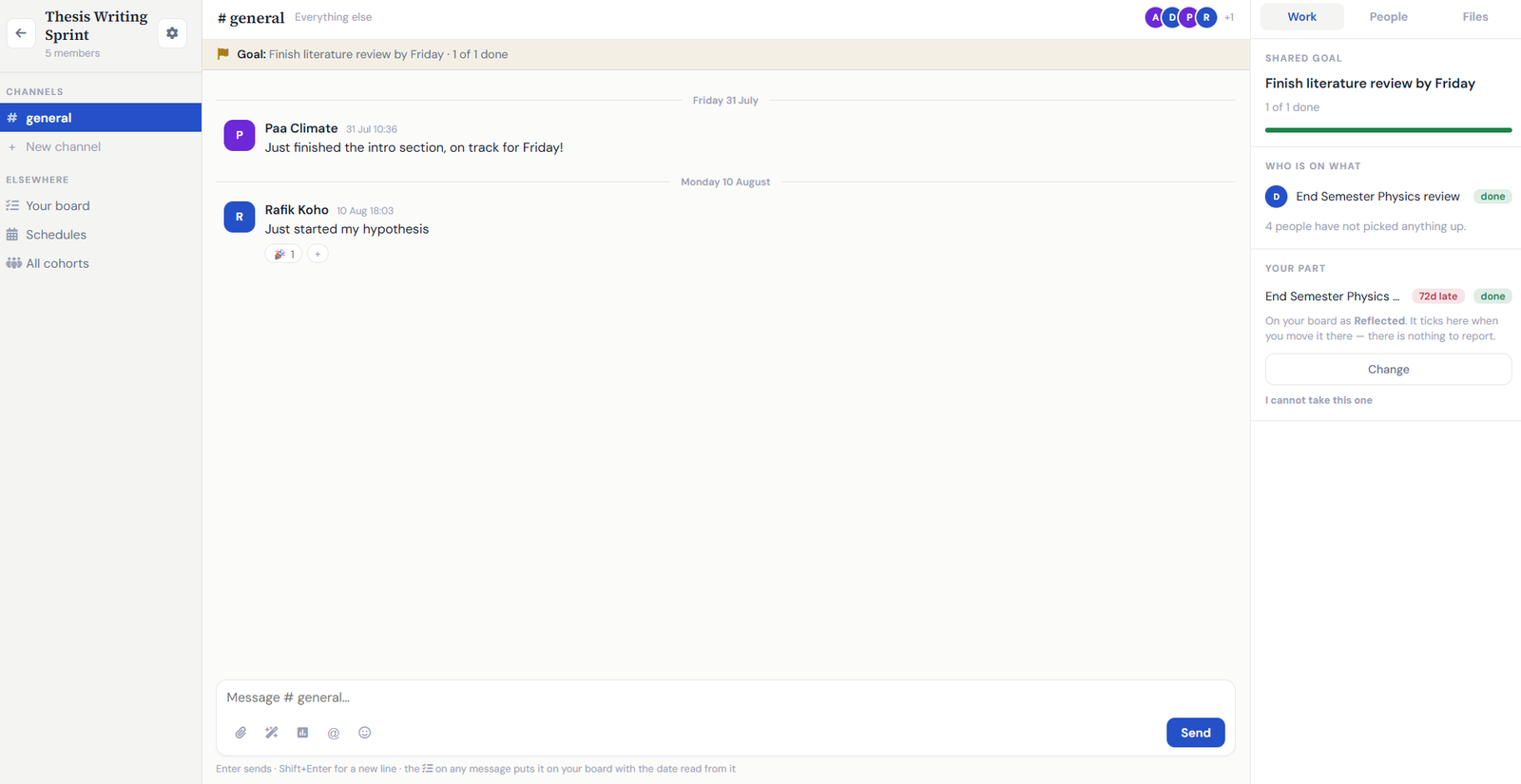
Access freezes at the moment somebody joins. A person invited today does not gain access to everything shared into the cohort before they arrived. A reading group should not hand a new member the back catalogue of someone else's drafts by accident.
Inviting people who have no account
Invitations go by email address, and resolve when that person signs up with it. Only an owner can invite, and only an owner can revoke.
Was this article useful?
Thank you. That is recorded.
Previous: Plans, sessions and your calendar